If you live in a house with a garden, or have just finished building one, you surely have a “leftover” piece of land that could become a garden. If you don’t know what to do with it, it’s best to contact a landscape architect while the house is still under construction. Often, even “leftover areas” hide great potential. At the same time, it can be difficult to figure out how to turn them into a meaningful and full-fledged space. Yet often it’s enough to design a good basic layout, do some landscaping, and not be afraid to recycle.
But now back to the topic, which is closely related to landscaping. You have a garden or even a small area that you’d like to improve, and you know what you expect from it—or conversely, what you don’t. In short, you want a change. You don’t need a sandbox and a playhouse for 15-year-olds anymore. Does the lawn in front of the entrance turn into a swamp when it rains and parched concrete when it’s dry? Then it’s time to get started on improvements this spring. And usually, it only takes a little, believe me.
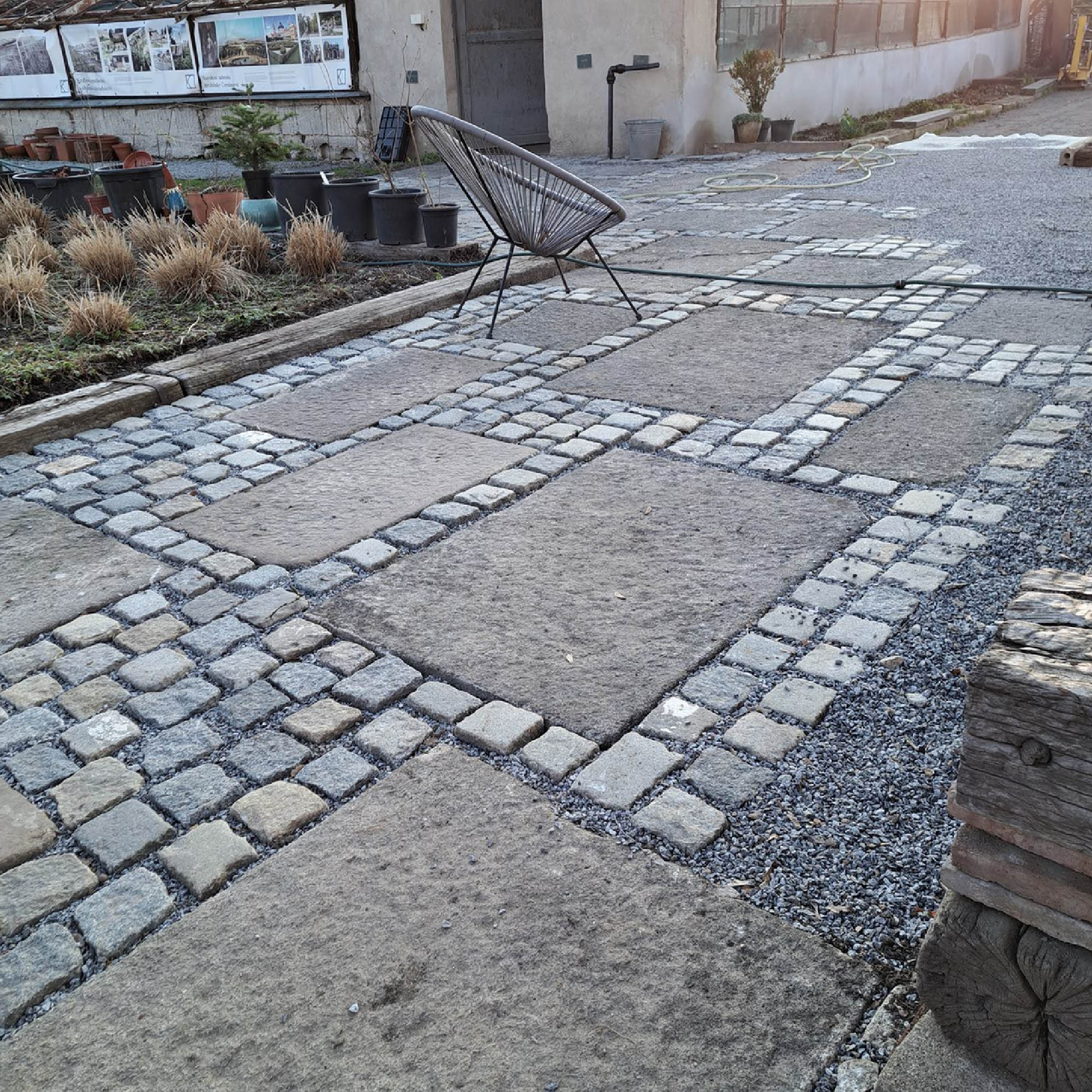
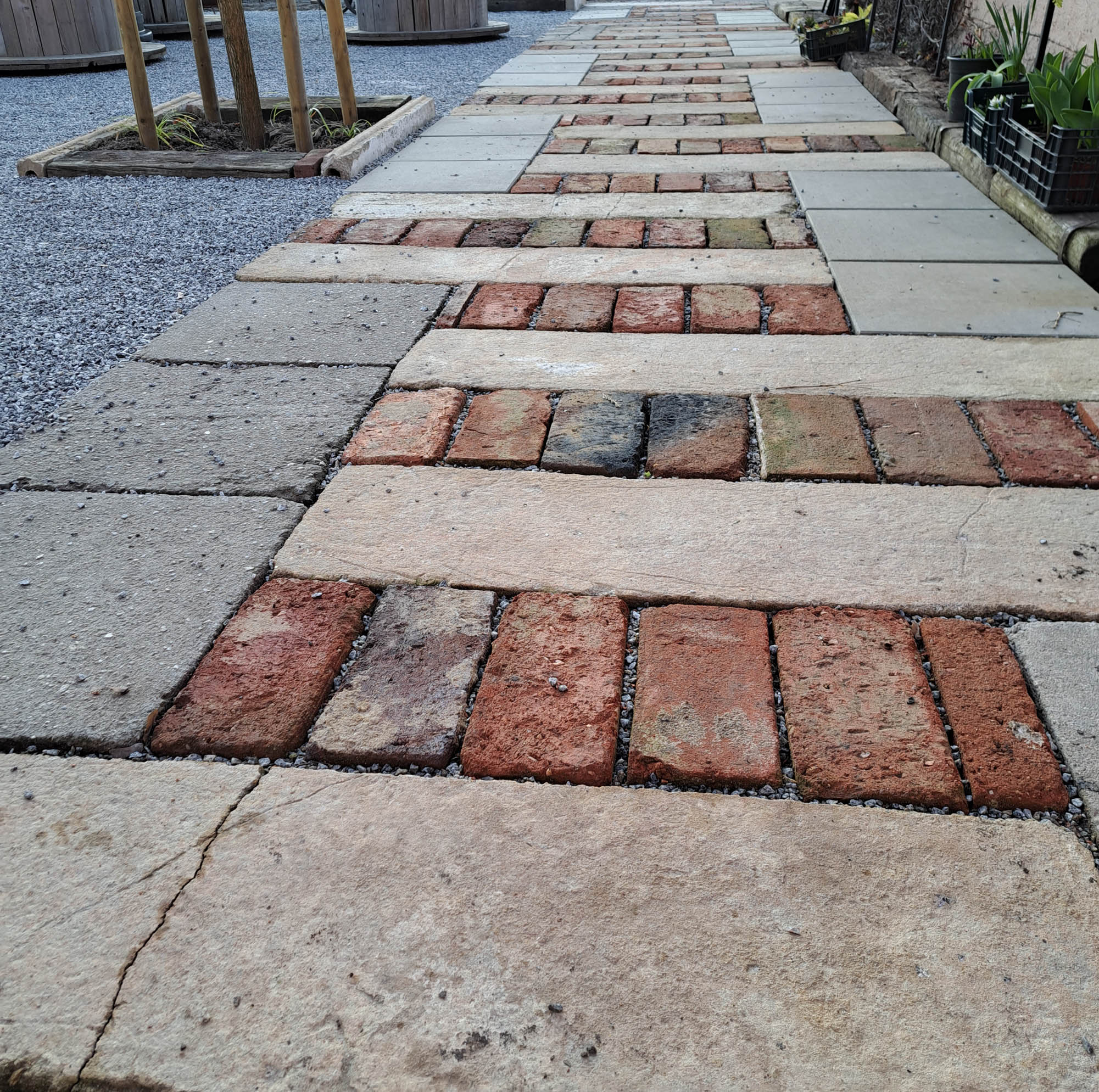
Just look around and recycle. For example, at Kraffer’s Garden, we realized that if we want to welcome visitors as often as possible, and ideally throughout the entire season, a lawn is unsustainable for us in many places. We therefore decided to replace it in these areas with a paved surface, preferably water-permeable. Since we like to save both the environment and our wallets, we first looked around to see what could be used. For the umpteenth time, we went through a pile destined for the landfill, put the word out among friends, and within a few days, the material for the paths was ready.
And what did we recycle? Pink-painted concrete lintels that sat outside so long they became beautifully weathered. Old fired bricks left over from demolishing buildings. Stone slabs discovered by chance under a pile of waste. Tiles that had to be moved so we could install new water pipes and storm drains. And also a few old stone cobbles that always seem to turn up somewhere.
Do the same. Look around for what you no longer need around the house. See if a neighbor is tearing down a wall and has leftover stones. Besides saving a lot of money, materials that have their own patina and history will give the garden just the right atmosphere. You can build not only a path but also a low wall, a raised bed, stairs, or anything else you can think of.
The only complication when working with such diverse material can be its sheer variety. It takes a bit of skill to put it together, and if it doesn’t work out the first time, there’s nothing easier than taking the area apart and trying again and again. A perfect result will surely come, and you won’t want to stop recycling, just like us.