
The Garden's Story
The Garden's Story
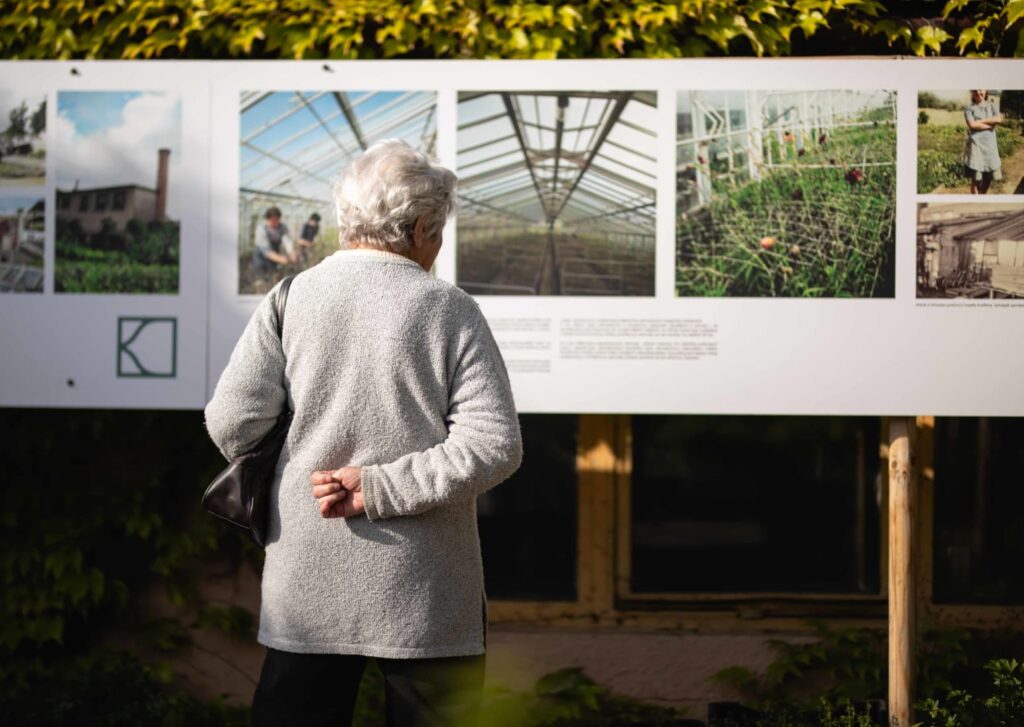
A Walk Through History in the Garden
Right in the garden, you’ll find plenty of information about its history; four large panels summarize the four main stages of the garden’s story. In addition, eight smaller panels are placed throughout the garden, reminding visitors of eight specific selected moments. You’ll learn, for example, what Bedřich Smetana had to do with the garden or when and under what circumstances the connection between the garden and the Klášteříček building was discovered.
We also organize community projects in the garden, where we continue to work with the garden’s history.

The UnFORGOTTEN GARDEN Film
A 2022 documentary film by Petr Miloš and Michaela Zudová. A documentary about the history of Kraffer Garden in Jindřichův Hradec. Memories of witnesses and period photographs are complemented by the present in both word and image. The music enhancing the atmosphere is mainly the work of composers associated with Jindřichův Hradec, such as Adam Václav Michna z Otradovic, Vítězslav Novák, Bedřich Smetana, and contemporary local authors.
The UnFORGOTTEN GARDEN Film
A 2022 documentary film by Petr Miloš and Michaela Zudová. A documentary about the history of Kraffer Garden in Jindřichův Hradec. Memories of witnesses and period photographs are complemented by the present in both word and image. The music enhancing the atmosphere is mainly the work of composers associated with Jindřichův Hradec, such as Adam Václav Michna z Otradovic, Vítězslav Novák, Bedřich Smetana, and contemporary local authors.
History of the Garden
Kraffer Garden is the last large garden in the historic center of Jindřichův Hradec. Its past is absolutely fantastic. It was established for Countess Isabella Czernin in 1759. Jan Antonín Zinner, the creator of the castle gardens in Český Krumlov, contributed to its design, so we can imagine how magnificent it must have been. After the great fire of the city in 1801, the garden was destroyed and never restored. In the mid-19th century, it was acquired by Ignác Kraffer, and his family ran a renowned nursery here, offering a fantastic range of plants for its time. The second half of the 20th century meant a period of decline and total devastation for Kraffer Garden. The nursery was taken from the family, two huge heated greenhouses were built in it, and in the 1980s, the dilapidated site was abandoned. In 2003, after decades of decay, Martin Charvát and Radovan Hájek leased the nursery in a pitiful state and built a perennial nursery literally out of a forest. They left it in 2020, and dark clouds began to gather over the garden in the form of a planned parking lot.
You can find more details about the garden’s history on this page and directly in the garden, where several panels dedicated to the garden’s past await you. You can look forward to a summary of the most important milestones as well as stops at selected moments from the garden’s story.
The Baroque Garden of Countess Czernin
The Baroque garden was founded in 1759 by Marquise Maria Isabella Johanna Merode de Westerloo, widow of František Josef Czernin. The creator was the garden inspector, gardener, and sculptor Jan Antonín Zinner, who came from the Zinner gardening dynasty. He participated in the creation of many gardens in Vienna and its surroundings. For example, the garden of Schloss Hof on the border of Austria and Slovakia is one of the most beautiful gardens in German-speaking regions. He is the creator of the Baroque castle garden in Jaroměřice nad Rokytnou, and the cascade fountain in the castle garden in Český Krumlov also comes from his workshop.
A similar garden could have been in Jindřichův Hradec. It was connected to the Klášteříček building and entered through a richly decorated salla terrena. An axis passed through the center to the original Baroque gate, which is still preserved today, and a varied program typical of gardens of that time unfolded on several terraces. There were numerous shady bowers, gazebos, or a bowling green. In addition to a number of ornamental beds, water and water features also played an important role. On the highest terrace with a view of the landscape, there was a large sculpturally decorated fountain visible from all corners of the garden. It depicted a dolphin with an eagle’s beak biting into its nose. This fountain was followed by a water cascade in the form of a shell and an artificial rock, and the cascade ended in a large circular pool.
Until the end of the 18. century, the garden was preserved in its original unchanged state. In 1801, everything was devastated by fire, and restoration was never undertaken. The garden’s equipment, including stone elements, was gradually dismantled, and the garden was divided among manor officials.

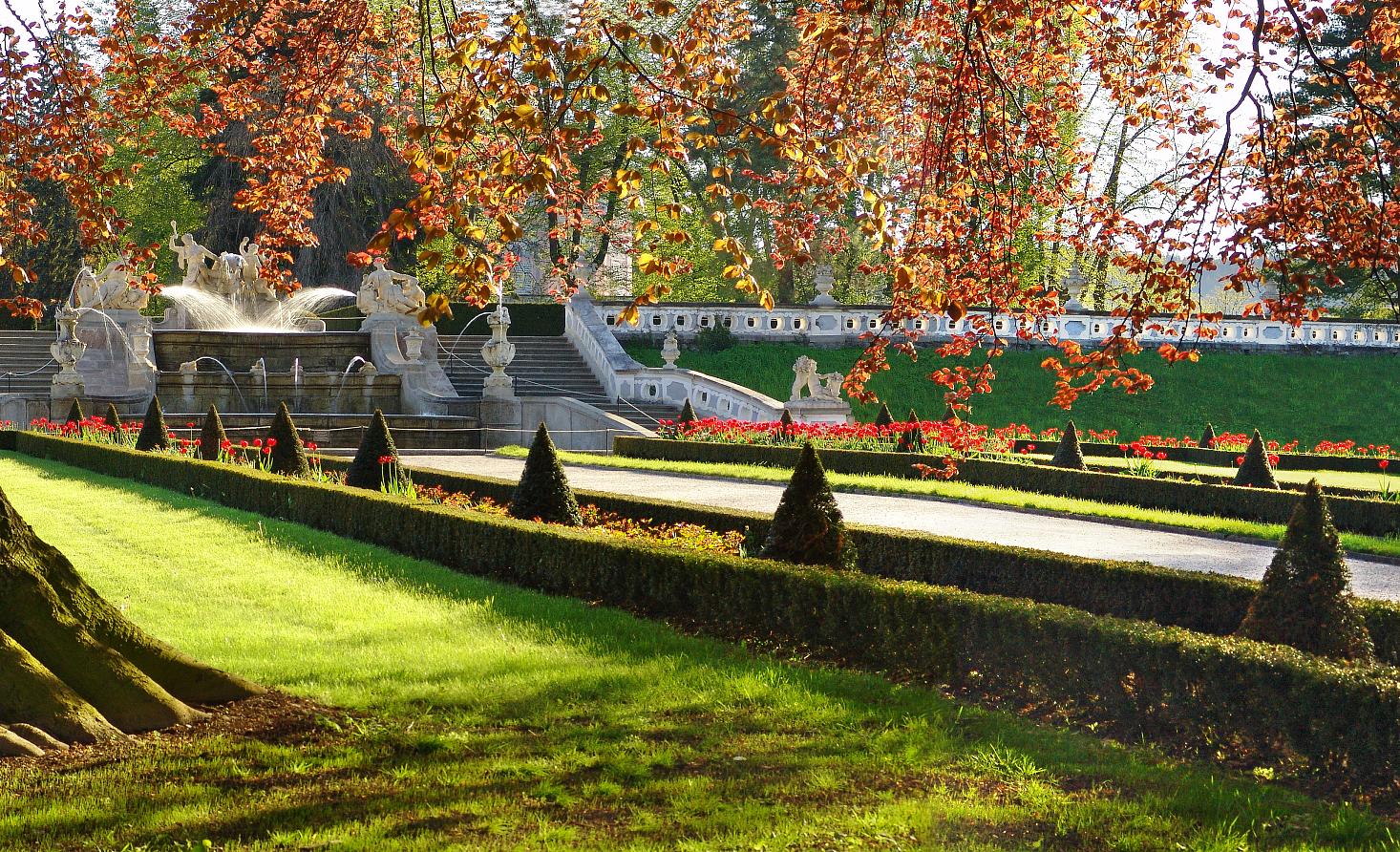
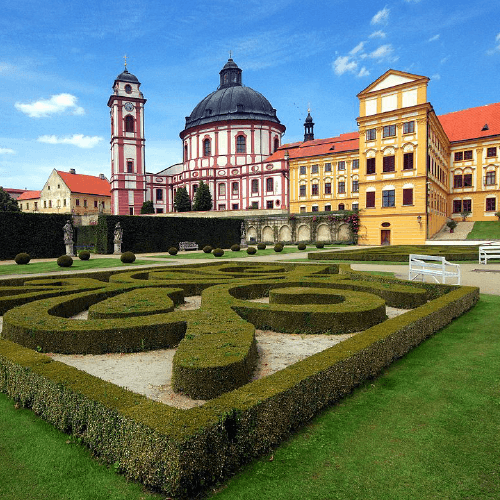
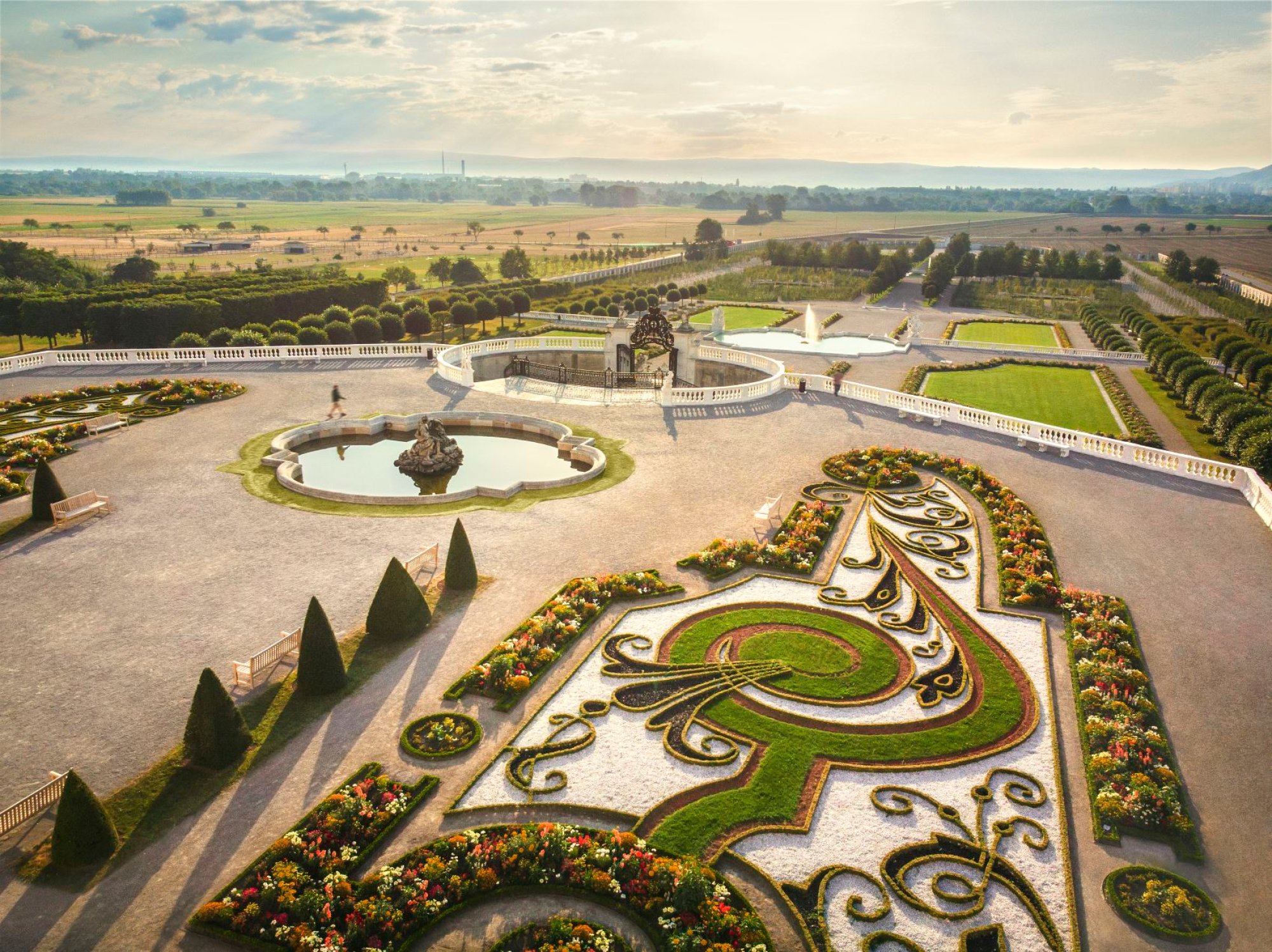

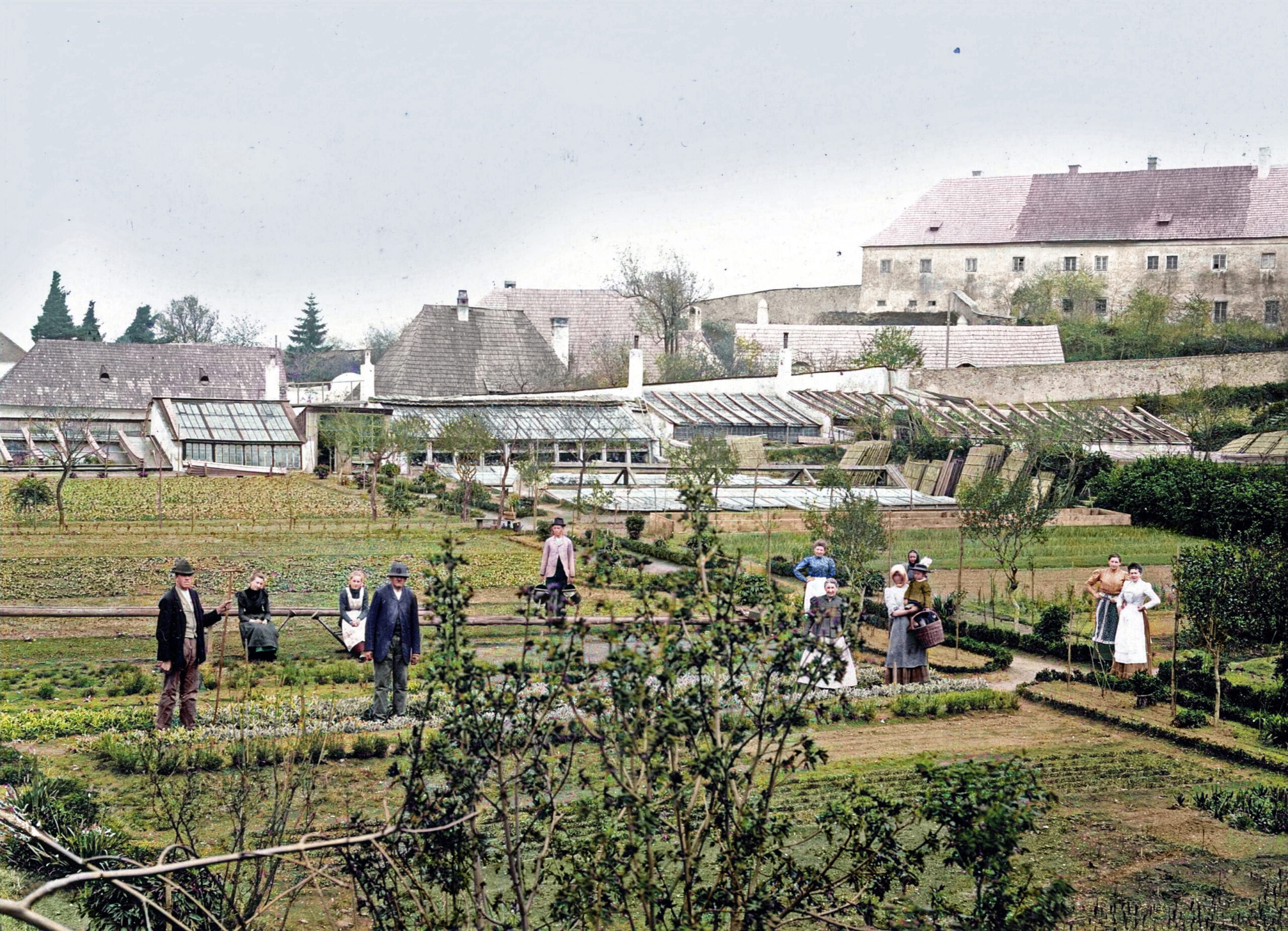
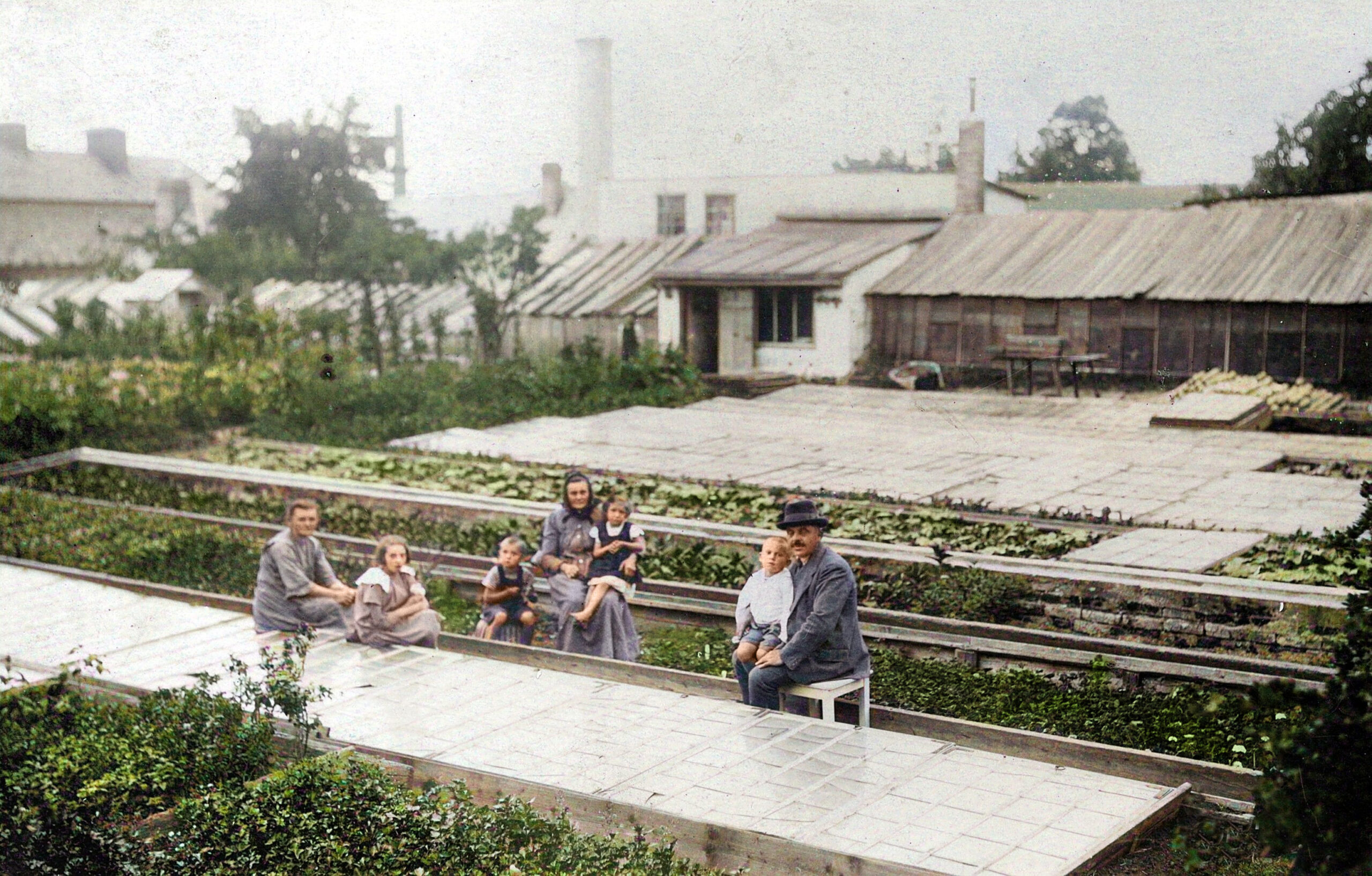
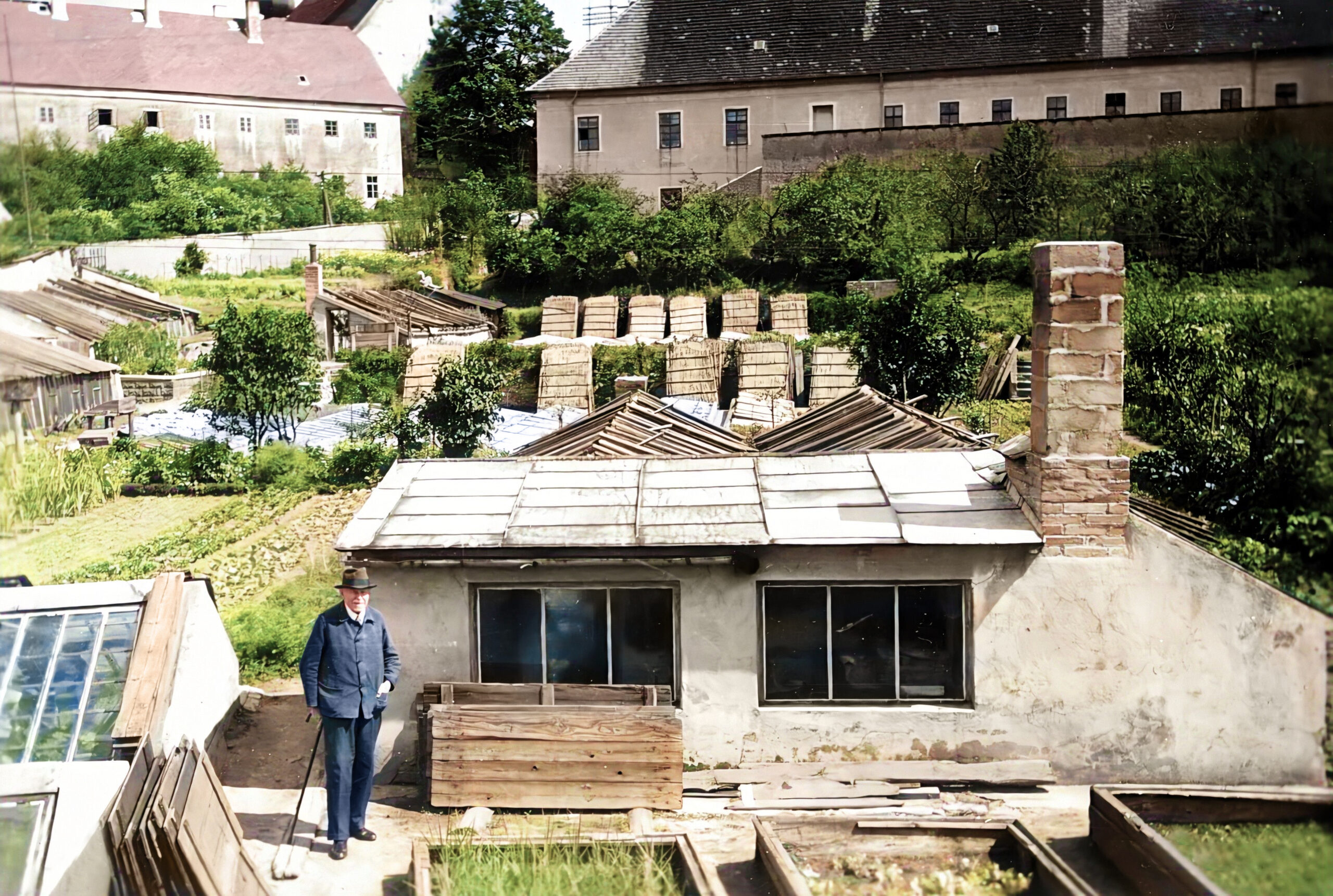
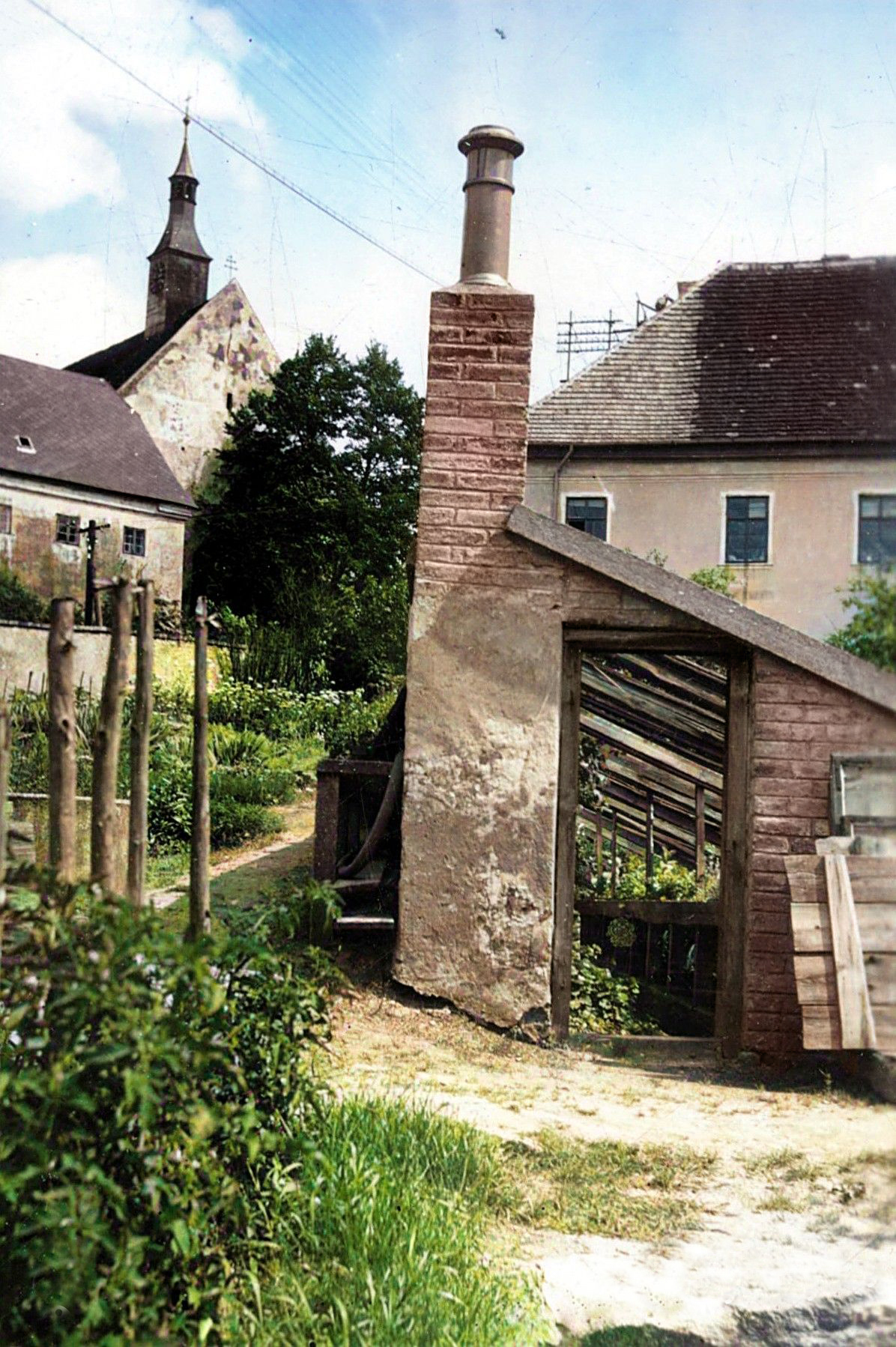
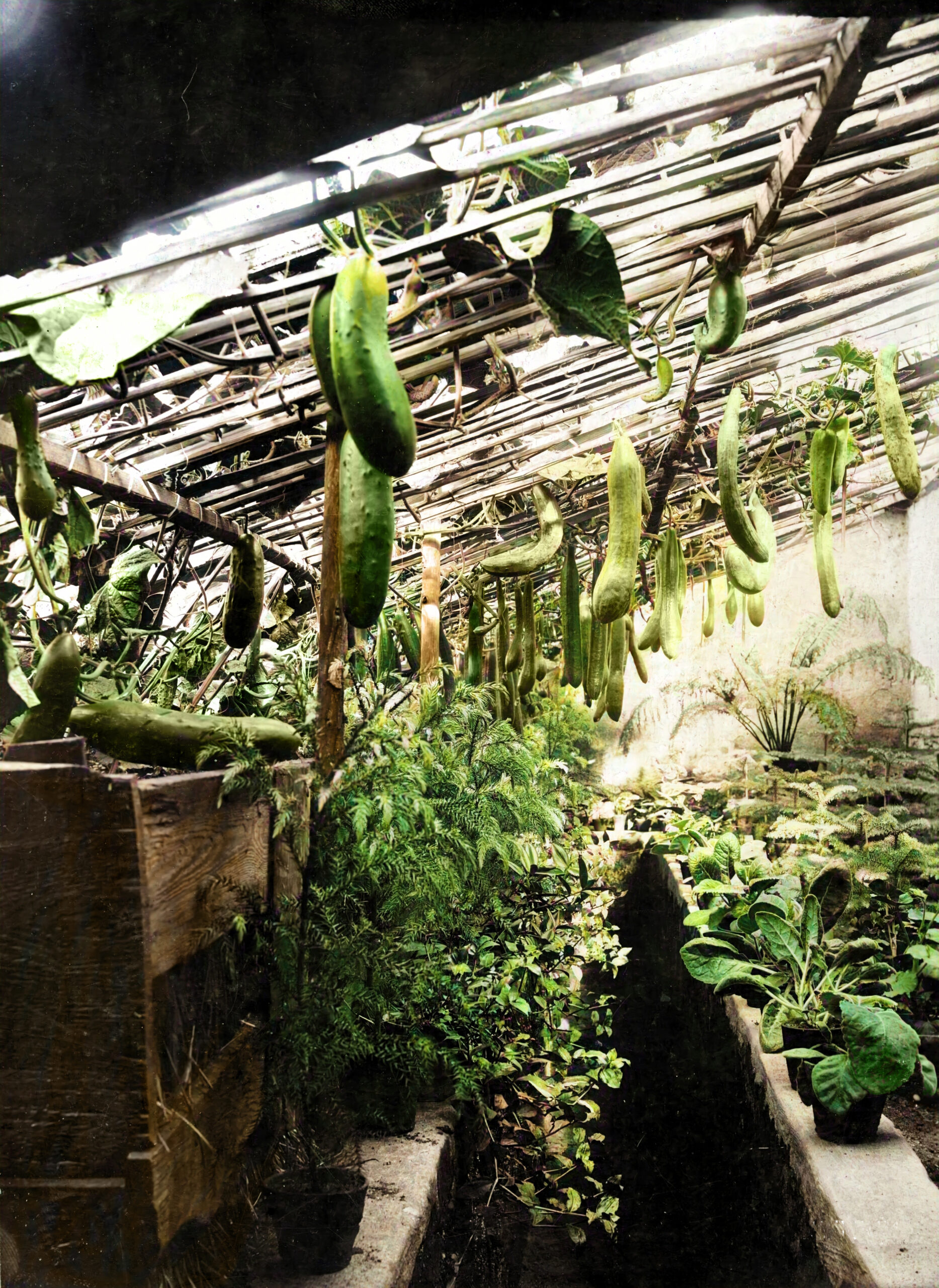
In 1854, the garden was bought by the clothier Karel Solpera, who immediately made a profitable exchange. He traded it with the gardener Tomáš Hruška, who had a nursery next to his house. Satisfaction was on both sides. Solpera had a larger plot, and Hruška had a new nursery… and also a daughter who married Ignác Kraffer. This opened the golden era of Kraffer’s nursery, where the whole family worked.
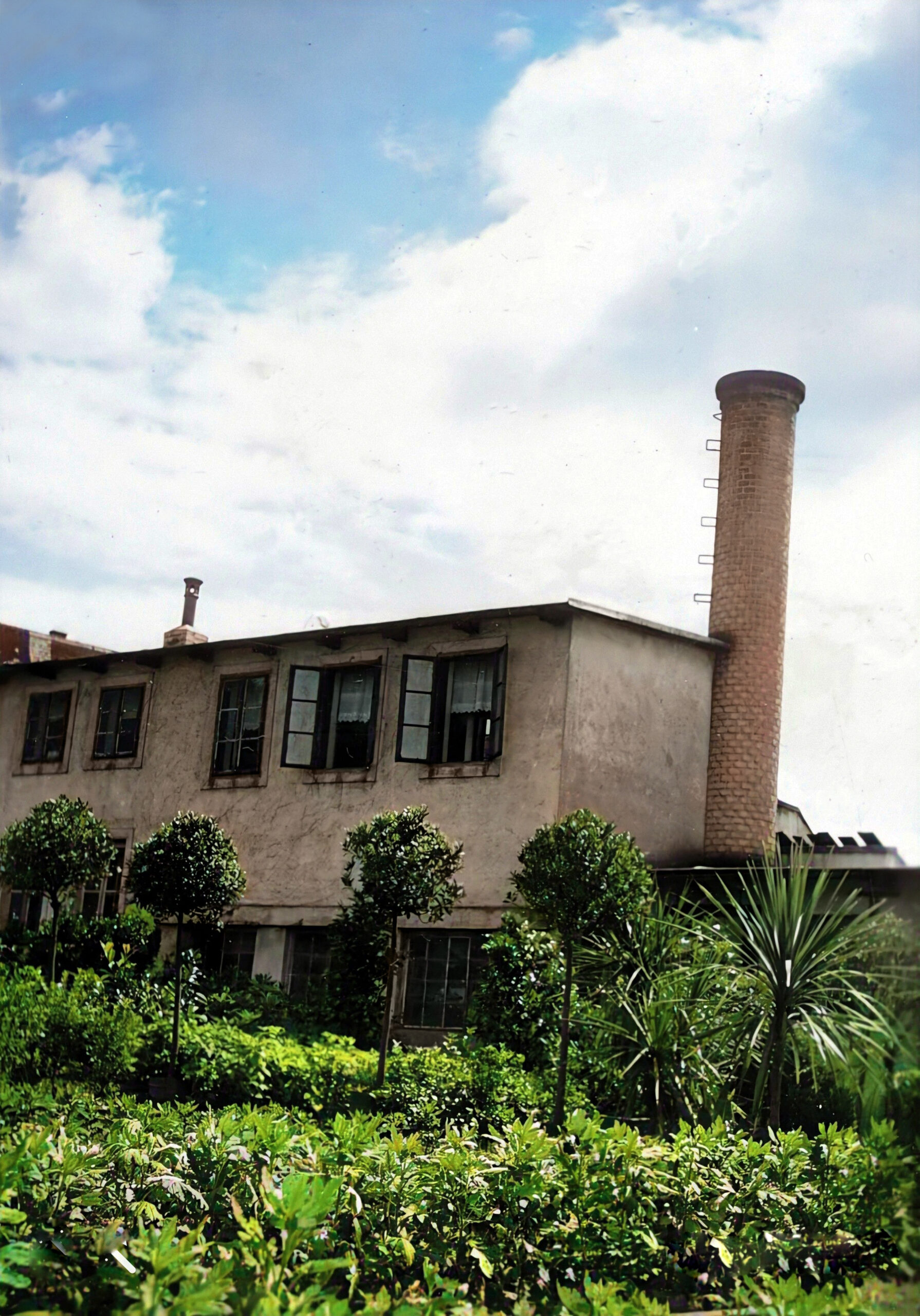
At the beginning of the 20th century, Josef Kraffer took over the nursery from his father and continued the family tradition. The gardening production at that time included everything you can imagine. From outdoor flowers to indoor plants, citruses, camellias, to vegetables and fruit trees. For special occasions, there was even a plant rental service. Since there were no hoses or various machines, the gardener’s most faithful friends were the hoe and the watering can. An ingenious water distribution system from this period has also been preserved in the garden. The greenhouses and buildings from this era are still preserved in the garden today, exuding the true atmosphere of the First Republic gardening craft.
In 1953, the nursery was confiscated from the Kraffer family and nationalized. The original owners, who had built the family business for decades, could only stay there as employees.
Komunál
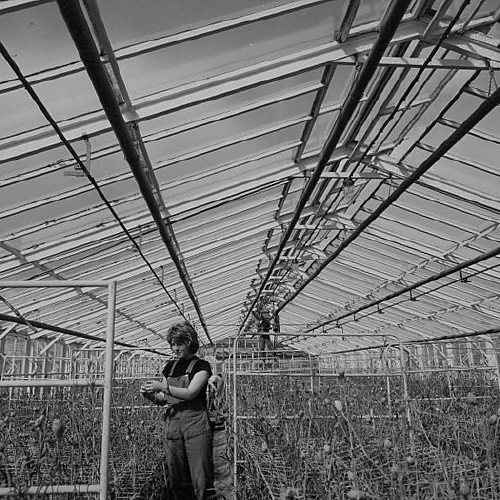
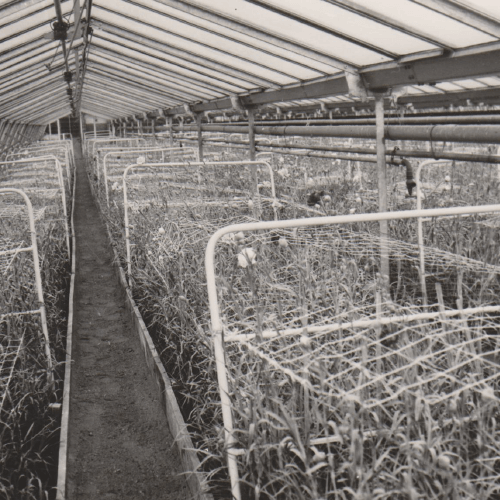
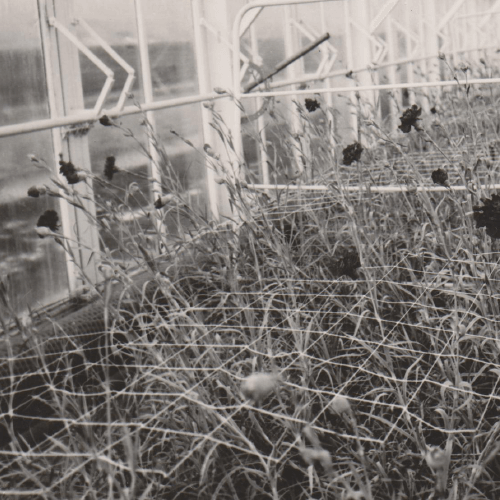
The Kraffer family’s bond with the garden was so strong that even Josef Kraffer’s descendants continued to work in the nursery, which at that time was already under the banner of Municipal Services (Komunální služby). The period of socialist gardening left the most significant mark on the garden in the form of two huge 50m long heated greenhouses and a new boiler room, which was built on the site of the original greenhouse.
These extensive buildings definitively destroyed the Baroque composition of the garden, which had been preserved for more than 200 years. The original Baroque gate was walled up, and the garden gradually turned into a dump.
In the 1980s, the nursery was finally abandoned, and the operation, along with the employees, was moved to more modern facilities outside the city. The gates of Kraffer Garden thus closed for the next 20 years.
Florianus Perennial Nursery
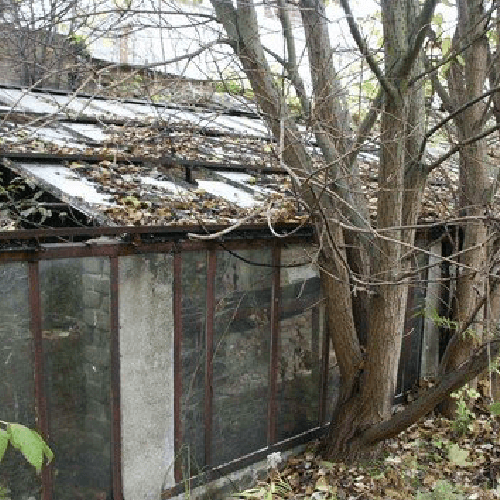
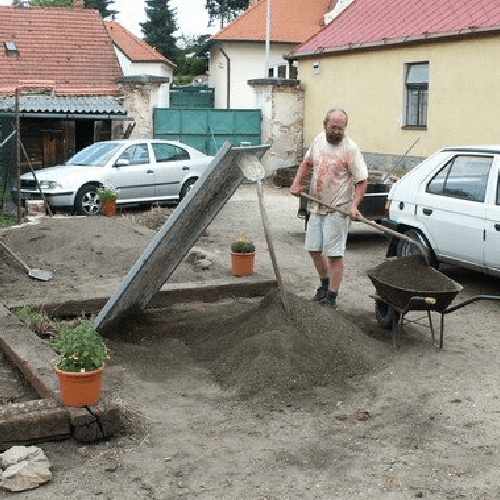
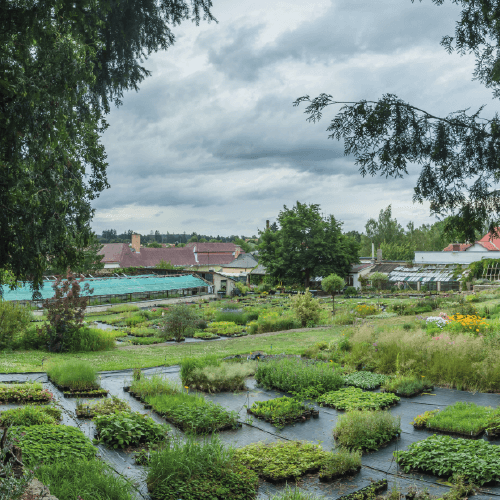
After 1989, the devastated garden was returned to the Kraffer family in restitution. They then sold it to the City of Jindřichův Hradec, and in 2003, the Florianus perennial nursery leased it. The garden was completely overgrown at that time and resembled a forest. Everything was destroyed, the greenhouses were broken, the original terraces were filled in, and the entire garden had turned into one big dump.
Nevertheless, within a few years, they managed to build a prosperous perennial nursery producing a wide range of perennials, grasses, and herbs. Some Baroque terraces were restored, and the entire garden became a model natural garden with thematic beds and a popular destination for garden tourism.
The Florianus perennial nursery ceased operations in 2020.